Your unique model: the underlying engine
- A live read of how you make meaning, carried across every conversation.
- See how you are getting in the way of your own goal.
- A weekly mirror letter so you can see yourself changing.
How do some people achieve the seemingly impossible? They change themselves or the system around them instead of pushing harder inside it. That's second-order change. This app teaches it, on the goal you've been calling impossible.
Free while we’re testing. We take a few people at a time.


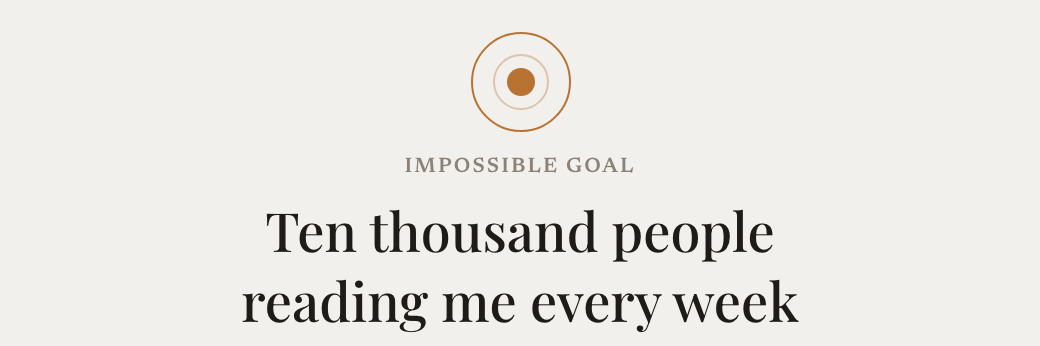
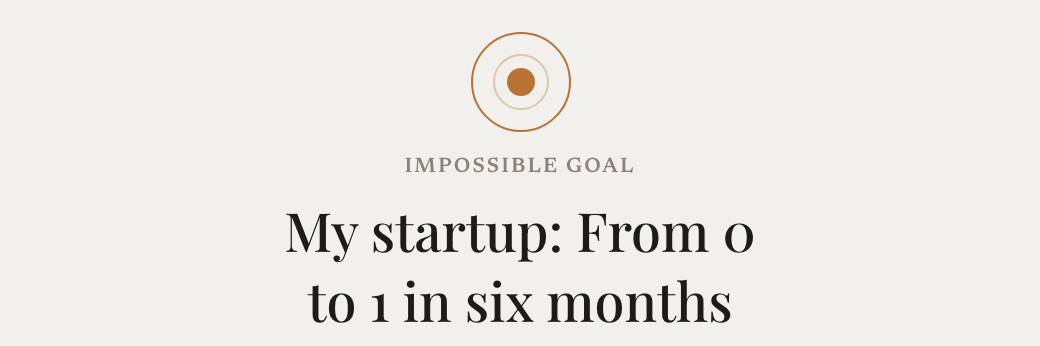

It sees the bigger goal before they say it, names the change that matters most, and designs an experiment that takes them past what feels comfortable.
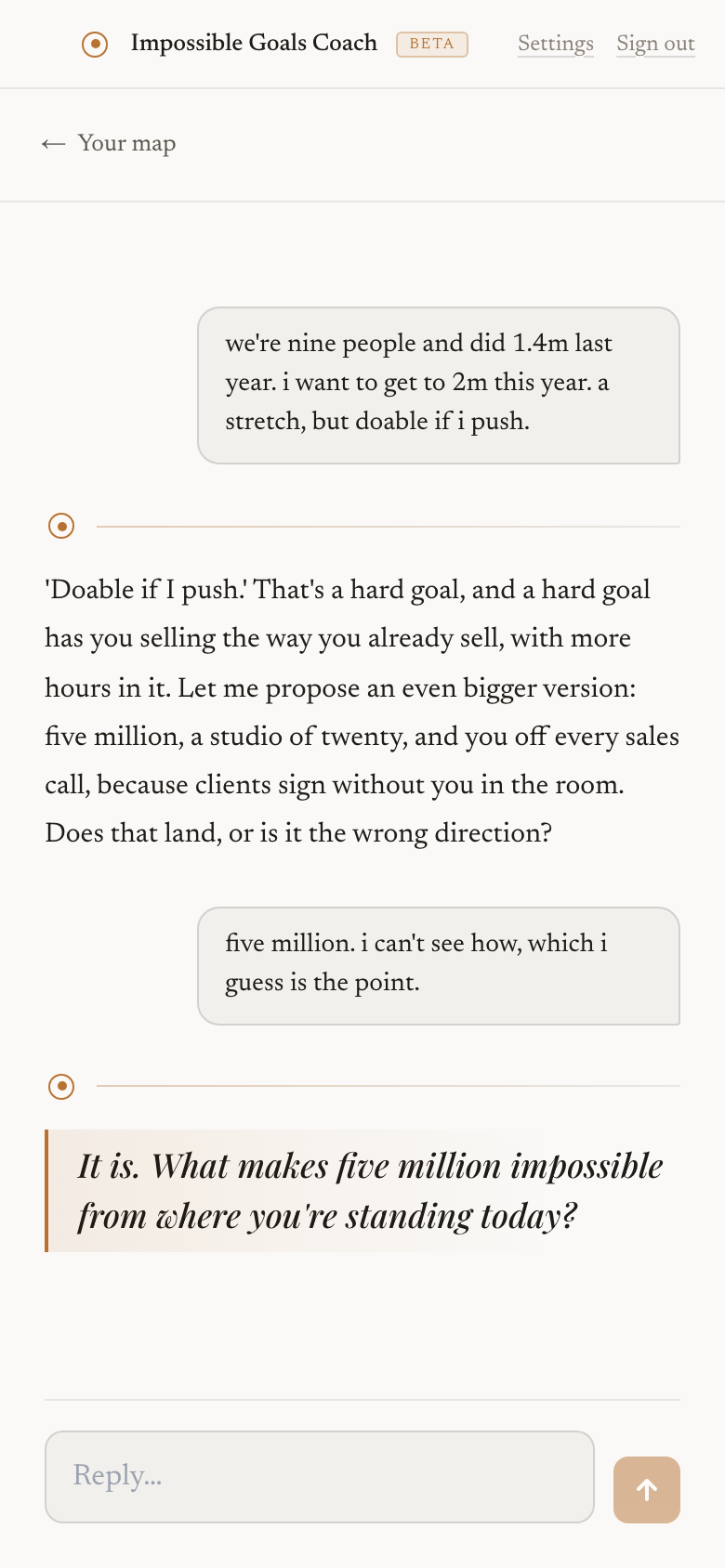
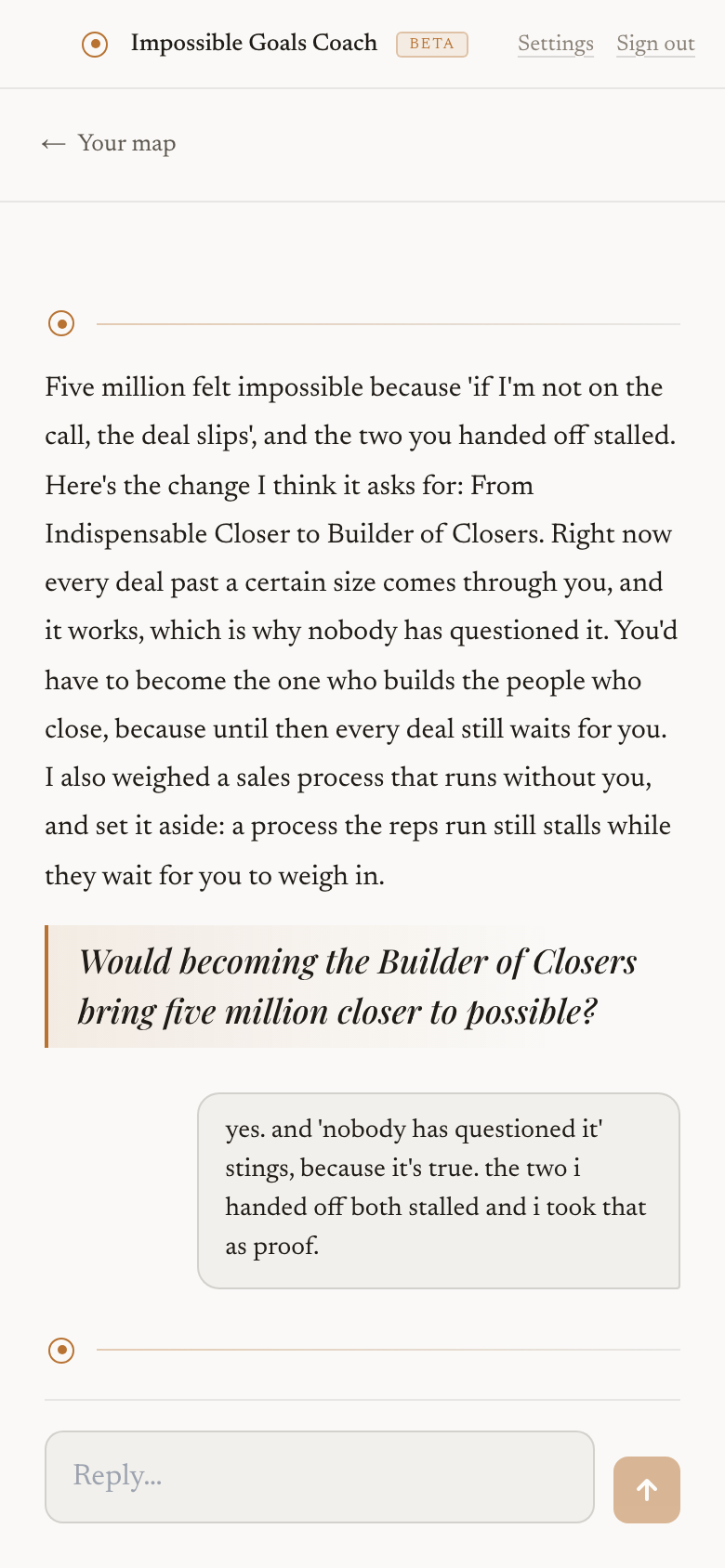
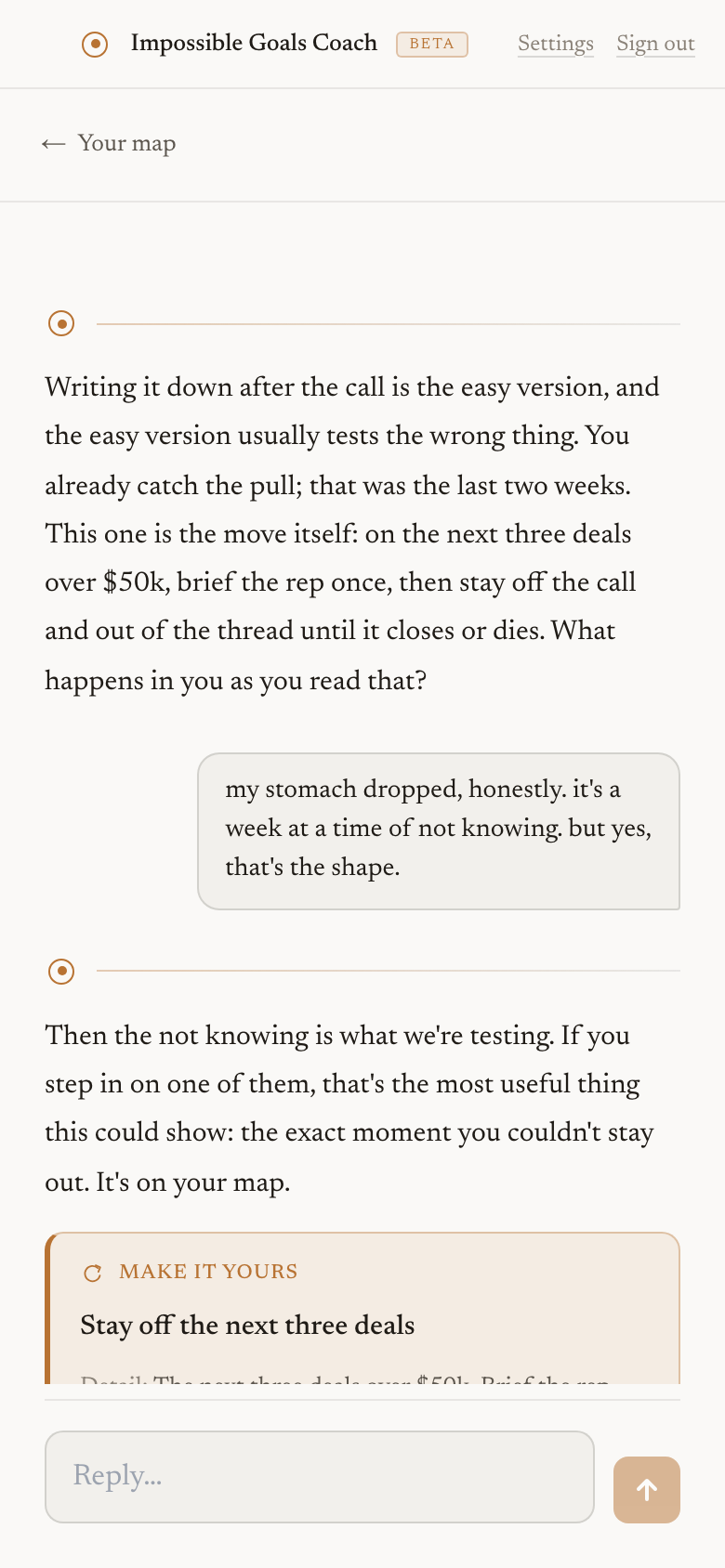
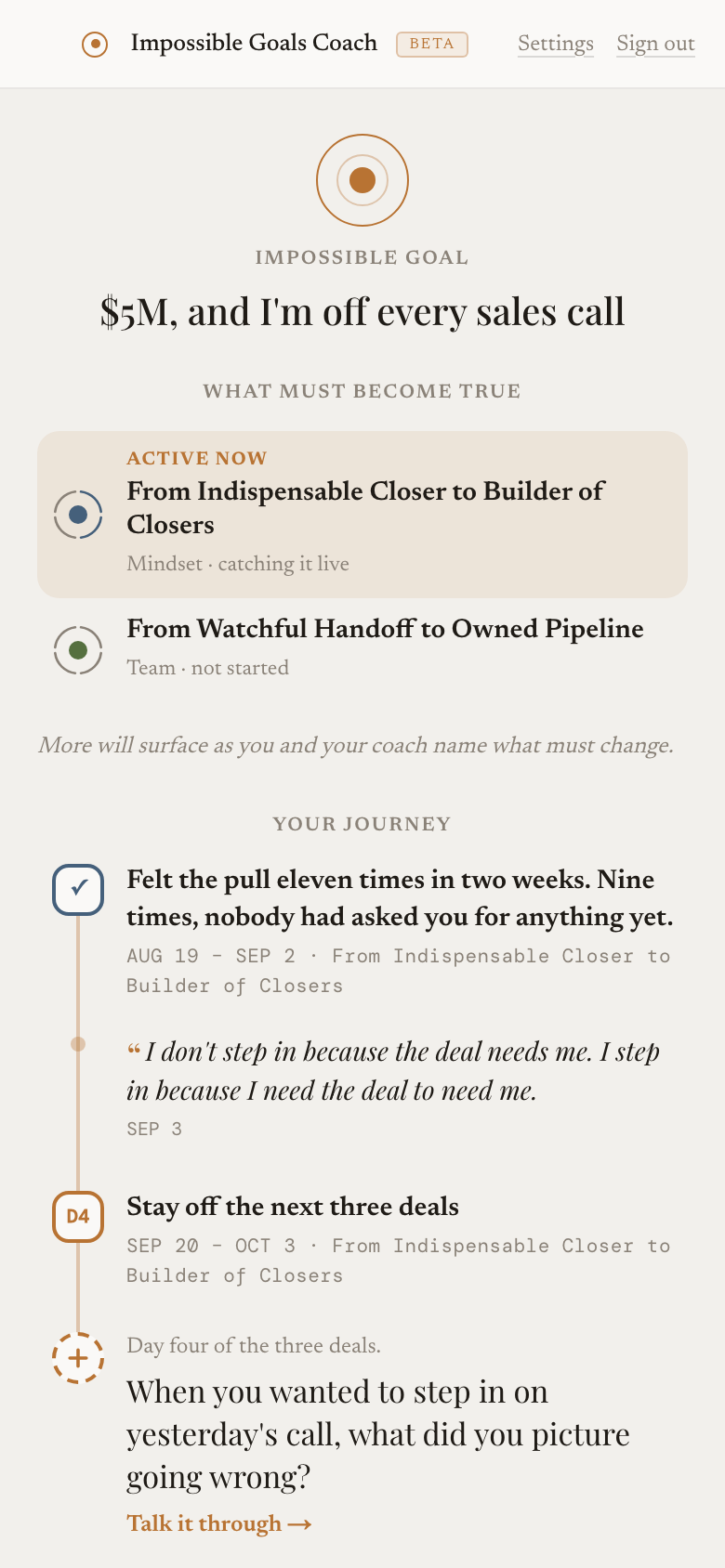
One goal that feels impossible, the changes it asks for, and one experiment at a time.
You should doubt it's achievable. It should feel scary. It will demand profound change in you and your environment.
What has to transform across your mindset, habits, systems, and team?
Run experiments that test the assumptions in your way and build your capacity for change. Each one reveals the next step.
Sudden, impossible change has been studied for decades, in toppled regimes, disrupted industries, and lives that turned around. The same shape keeps appearing across the research. We pulled it out and built it into one repeatable method, the loop the AI runs with you.
What's possible is limited by just a few hidden assumptions.
These assumptions live across four dimensions: mindset, habits, systems, and team.
Profound change occurs when we hold an unrelenting focus on these hidden assumptions (known as second-order change).
Impossible goals always feel scary, and reaching them means moving into your discomfort zone.
Corollary 1Risk aversion kills impossible goals.
Corollary 2If you're comfortable, you're enacting incremental, not impossible, change.
The path is unknown, so success comes by experiment rather than by strategic planning.
Change accumulates invisibly, then arrives suddenly.
Underneath every conversation is a developmental model of you, sharpened every time you talk, and a method built on the research into how that change happens.
The researchers and practitioners whose work the method is built on.
Ronald Heifetz · Peter Diamandis · Otto Scharmer · Paul Watzlawick · Robert Kegan & Lisa Lahey · Dave Snowden · Jennifer Garvey Berger · Richard Strozzi-Heckler · Carol Dweck
What's the goal that matters most to you and still feels genuinely impossible, the kind you can't see a path to from where you stand?
That's where we begin.
Free while we’re testing. We take a few people at a time.